
艺术在权力、瞬间与永恒之间的位置
——皇家巡访艺术家苏珊娜·费因斯访谈录
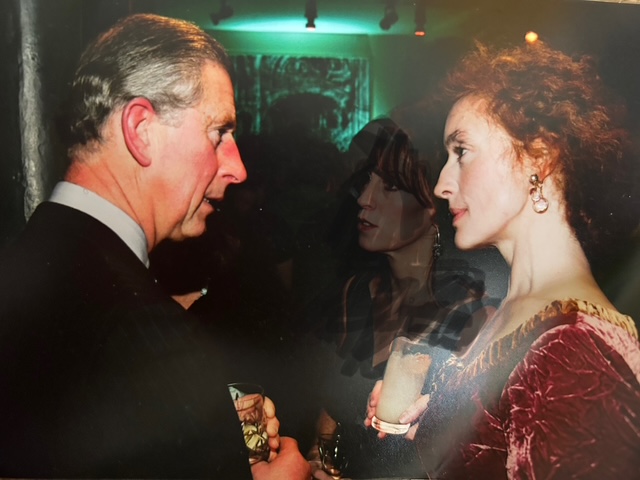
苏珊娜·费因斯与查尔斯
欧洲君主携艺术家出访,是延续两千余年的官方传统,核心承载视觉纪实、文化外交与国家宣传职能。该制度始于古罗马,帝王出行会携御用画师随行,实录战事、异域风貌与王室典仪。文艺复兴时期,这一传统走向鼎盛,随行艺术家不再局限于记录工作,兼具勘察、设计、创作等多重职能,达·芬奇、拉斐尔、丢勒等艺术巨匠,均曾跟随君主参与外事出行,留存大量珍贵写生作品。
16至17世纪,近代艺术家深度介入外交事务,鲁本斯受命出使英国、兼顾外交与艺术创作;凡·戴克常年追随英国君主创作王室肖像,法国波旁王朝也专属画师记录外事盛况,助力王室形象传播。时至今日,延续这一古老传统,并且作为一项制度保持下来的非英国莫属。1985年春,当时还是威尔士亲王的查尔斯,自掏腰包邀请英国画家约翰·沃德其随团访问意大利,担任首位官方巡访艺术家。2025年夏天,白金汉宫国事厅将举办一场名为“国王巡访艺术家”的特别展览,展出国王查尔斯私人收藏的70余件艺术作品,其中许多作品均为首次公开亮相。在过去的40年里,国王一直亲自挑选官方巡访艺术家随行进行海外巡访,其创作任务基本保持不变。此次展览将展出曾担任此职的42位艺术家的作品,他们共随国王进行了69次巡访,到访过95个国家。
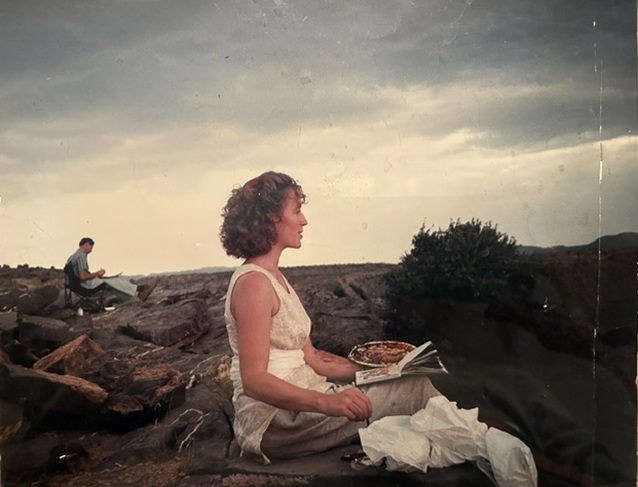
苏珊娜·费因斯在巡访途中写生
苏珊娜·费因斯(Susannah Fiennes)曾三次跟随查尔斯三世出访——阿曼(1995)、香港回归(1997)、南美(1999),其独特的随行创作经历与艺术感悟,也成为这一制度价值的生动缩影。
教育
1979年威尼斯、佛罗伦萨和罗马艺术史课程
伦敦大学学院斯莱德美术学院(文学学士,一级荣誉学位)1979-1983年
奖项
1993年BP肖像奖旅行奖(中国)
英国机构基金奖,皇家艺术学院(伦敦),1984年
1983年博伊西旅行奖学金(意大利)
威尔士亲王殿下的巡演艺术家
阿根廷、乌拉圭和福克兰群岛 1999
香港 1997
阿曼 1995
近日,盛鑫煜艺术创始人张鸿宾采访了苏珊娜·费因斯,就其艺术创作与随查尔斯出访方经历,进行深入交流。
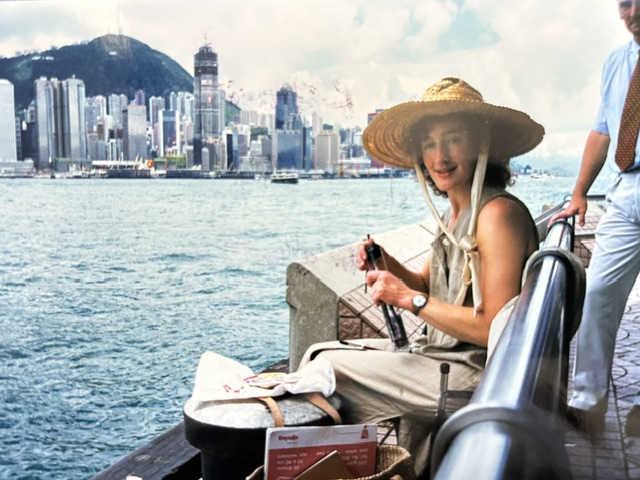
苏珊娜·费因斯在巡访途中写生
对话:张鸿宾&苏珊娜·费因斯
你成长于英国乡村与深厚文化传统的家庭,这种背景是否塑造了你观察人物与空间的方式?它如何影响你对瞬间情境的敏锐感知?
答:在布劳顿长大的经历让我对视觉世界产生了敏锐的感知。我很幸运,我的父母也热爱艺术、音乐、戏剧和文学。家里始终弥漫着文化与历史的氛围。
你既接受传统斯莱德绘画训练,又有大量现场写生经验。你如何在精心构建与直觉反应之间找到平衡?对你来说,真正的“观察”更依赖理性还是直觉?
答:是的,我曾在斯莱德艺术学院学习,但对我影响最深的是15岁那年。我进入了一所名为马尔伯勒学院的男子寄宿学校,在那里遇到了一位名叫罗宾·柴尔德的老师。他对我以及许多其他学生都产生了深远的影响。在那么小的年纪,他就教我们观察主体上明暗形状的相互作用。我完全被吸引住了。后来在斯莱德的学习过程颇具挑战性,因为学校几乎没有主动教学。不过,我们有一位模特以同一个姿势摆了整整10周,而我们就在这段时间里专注画一幅画。这给了我们一个难得的机会,去分析和探究眼前各种元素之间的关系。不是以图形化或说明性的方式,而是通过这种练习,我们学会了如何理解事物之间的关系。
但直到我离开斯莱德十年之后,我才获得奖学金前往中国。那时我坐在北京、上海、成都的街头,画飞驰而过的自行车,或是街边卖白菜的老太太。如果没有之前长期对着模特作画所培养的纪律性,我可能永远不会有勇气和必要的技巧,以如此快速而自发的方式工作。直到今天,我的创作方式中仍存在着一种张力——即分析性、学院式的回应与直觉性、情感性的回应之间的张力。
你也在皇家绘画学校(RDS)教授绘画,在你看来,传统绘画在当代艺术中仍有哪些独特价值?它仅是技法训练,还是理解世界、重塑视觉语言的重要方式?
答:实际上,我已经不再在皇家绘画学校(RDS)任教了。18年前我在伦敦开设了自己的真人素描课程,每周三上午进行。我非常坚定地相信,对着真人模特写生的重要性,同时我也相信教会人们如何欣赏绘画作品的价值。而如今这些在这里已经不再被教授了。博物馆策展人只写一些平淡无奇的评论,专注于历史背景,却完全不分享自文艺复兴以来画家所使用的复杂视觉语言。这让我非常生气!
你的作品使用油画和丙烯两种媒介。你如何根据创作情境选择材料?这种选择是否改变你观察与表达世界的方式?
答:我主要使用油画颜料,偶尔也会用水彩。在中国旅行时我只用丙烯颜料,因为它干得快。我觉得丙烯是一种回报率低得多的媒介。使用油画颜料的好处在于,它非常适合我长期逐步推进一幅画的方式:我可以反复观看、修改、刮掉、刮擦。它是一种强韧而富有弹性的媒介,与水彩截然不同。
获得BP奖前往中国,对你的创作有重要影响。你如何理解这种由外部契机触发的艺术方向转变?它是偶然的机会,还是早已存在的内在倾向被激活?
答:1993年前往中国旅行是一次巨大的荣幸,它对我的创作产生了重大影响。在花费数周时间画一幅画之后,能够如此快速地工作让我感到一种解放。我还从中国书法中获得了滋养,无论是街头招牌还是博物馆里的作品。书法那种抽象的特质和如舞蹈般的结构深深吸引了我,结合水彩的使用,它帮助我更加直觉地表达自己。
中国街头快速写生让你摆脱理性训练,转向即时反应。你如何理解这种“从控制到释放”的过程?特定环境是否迫使艺术家重新发明绘画方法?
答:肾上腺素是一种强大的武器。我在街上画人时,经常被30多人围观。这种紧张的氛围其实非常有益,它让我保持高度专注。是的,我相信环境和情境能在艺术创作过程的演变中发挥重要作用。
在中国创作时,你强调通过人物面孔理解社会与历史。相比宏大叙事,通过个体呈现历史经验是否更接近真实?跨文化观察中,你如何处理理解与距离的关系?
答:这是一个非常有趣的问题。我当时受国家肖像画廊委托,专门去画肖像,并且因为对《野天鹅》一书的兴趣而获得了这项奖学金。因此,专注于描绘个人似乎是理所当然的,尽管我发现自己很容易被自行车长龙所吸引,那也成为了一个极具吸引力的题材。不会说中文这一点,反而让我与描绘对象之间保持了一定距离。我的任务是要揭示20世纪的种种事件如何在他们的脸上留下了印记。
英国王室长期重视艺术与文化在国家形象中的作用。您如何理解威尔士亲王邀请艺术家随同国事访问这一传统?在您看来,这种做法在文化外交中扮演着怎样的角色?
答:的确,威尔士亲王遵循一项由来已久的传统,邀请艺术家随同他进行国外访问。这是在摄影术发明之前就存在的传统——让艺术家记录历史事件是合乎逻辑的。如今这已经很难被合理化,但我仍然坚信摄影与绘画之间存在本质区别。以彭定康在皇家游艇“不列颠尼亚号”上最后一次降下英国国旗的那一刻为例:那是一个意义深远的时刻,标志着大英帝国的终结。它充满了情感——而摄影,尤其是新闻摄影,可能无法如此充分地表达这种情感。
与摄影或新闻记录相比,威尔士亲王选择通过艺术家的绘画来记录访问行程,这似乎体现了一种独特的文化观。您认为这种选择反映了他怎样的艺术观与文化理念?
答:威尔士亲王对我们在历史和文化中的位置有着深刻的理解和信念:语境就是一切。
当您第一次被邀请作为“皇家巡访艺术家”随威尔士亲王出访时,您的第一反应是什么?这一邀请在您的艺术生涯中意味着什么?
答:当我最初接到随同威尔士亲王进行国外访问的邀请时,我的反应是难以置信,因为推荐我的朋友事先完全没有提醒我。当然,我对这样一个机会感到无比兴奋。从职业生涯角度来说,这对我很有帮助。我得以积累大量习作和速写本,后来得以展出和出售。毫无疑问,与威尔士亲王的关联也是一种吸引媒体关注我作品的方式(他们通常对“传统绘画”并不感兴趣)。然而,总会有一些批评威尔士亲王的人,认为他过于保守,过于注重传统,而不够重视创新。
你三次被选为威尔士亲王殿下(查尔斯三世)的巡演艺术家。随行艺术家,置身外交与政治语境。你如何理解自身在权力结构中的位置?是“被邀请的观察者”,还是保持距离的旁观者?这是否影响对真实的判断?
答:我想我感觉自己像是一位受邀的观察者。对我感知真相的唯一影响,是必须在经常极端炎热的条件下快速工作,同时还忍受着时差的折磨。这其实是一种很有益的训练,因为它迫使你专注于关键要素。
查尔斯三世既创作又支持艺术家,为随行艺术家提供创作自由。在你的体验中,他的支持更接近文化责任、个人兴趣,还是更深层的价值判断?
答:坦白说,我的印象是国王的支持反映了他个人的兴趣。我从未与他讨论过这方面的问题。我只知道他非常热衷于培育创造性学科。
“皇家巡访艺术家”这一传统在当代世界中仍然延续。您认为这一制度在今天仍然具有怎样的意义?它是否为艺术家提供了一种独特的观察历史与世界的视角?
答:是的,能够近距离见证重要的历史时刻(例如香港回归),是一种独特且极其荣幸的视角。我鼓励任何机构都应该通过给予年轻艺术家一些空间和时间,让他们近距离观察关键时刻来培养他们。我刚从艺术学院毕业时,曾有幸在威斯敏斯特教堂旁的一座修道院阁楼里获得一间免费的工作室。那份支持延续了教会长期以来的赞助传统,我从中受益匪浅。
Where Art Stands Between Power, the Moment and Eternity
— An Interview with Susanna Fiennes, Royal Visiting Artist
I. Growth and Observation
1. You grew up in the English countryside within a family with a strong cultural tradition. How do you think this background shaped the way you observe people and spaces? How has it influenced your sensitivity to fleeting moments?
Susannah: The privilege of growing up at Broughton gave me an acute awareness of the visual world, and I was lucky that my parents also loved art, music, theatre and literature. There was an atmosphere of culture and history.
2. You received traditional training at the Slade School of Fine Art and also have extensive experience with on-site sketching. How do you balance careful construction with intuitive response in your work? For you, is true “observation” more a matter of rational analysis or intuitive perception?
Susannah: Yes I studied at the Slade but the most important influence came when I was age 15. I went to a boys boarding school called Marlborough College where I met a teacher called Robin Child who had a profound influence on me, and many other students. At that early age he taught us to observe the interaction of light and dark shapes on the subject. I was captivated.
My subsequent practice studying at the Slade was challenging because there was very little active teaching; however we had a model who posed in the same pose for 10 weeks and we worked on one painting during that time. This gave us an extraordinary opportunity to analyse and investigate the relationship between the elements before us Not in a graphic nor in an illustrative way, but we learnt through this practice how to understand the relationship between things. But it was only 10 years after I left the Slade that I won the scholarship to go to China and I sat on the streets of Beijing, Shanghai Chengdu and drew bicycles speeding past, or old ladies selling cabbages on the streets. Without the discipline of drawing for an extended period from the model, I might never have had the courage or the necessary skill to work at such speed and spontaneity. To this day there is tension in the way that I work, between the analytical academic response with the intuitive emotional response.
II. Traditional Painting in a Contemporary Context
3. You also teach at the Royal Drawing School (RDS). In your view, what unique value does traditional painting hold in contemporary art? Is it merely a technical exercise, or a significant means of understanding the world and reshaping visual language?
Susannah: Actually, I no longer teach at the Royal drawing school since I set up my own life drawing class in London 18 years ago, which operates on Wednesday mornings.
I believe passionately in the importance of drawing from the life Model and I also believe in the value of teaching people how to look at paintings That is no longer taught here. Museum Curators write banal commentaries on the paintings, focusing on the history but sharing nothing of the complex language used by painters since the renaissance. That drives me mad!
4. Your work employs both oil and acrylic mediums. How do you choose materials according to the context of creation? Does this choice influence the way you observe and express the world?
Susannah: I work mostly in oil and occasionally watercolour. I only used acrylic when I travelled in China because I needed it to dry quickly. I find acrylic a much less rewarding medium. The advantage of using oil is that it suits my way of developing a painting over a long period of time; I can revisit, rework, scrape it off, scratch it. It’s a robust and flexible medium unlike watercolour.
III. Opportunity and Cross-Cultural Experience
5. Winning the BP Award and traveling to China had a profound impact on your work. How do you understand the artistic shift triggered by such external opportunities? Was it a chance occurrence, or did it activate tendencies already present within you?
Susannah: It was a massive privilege to travel to China in 1993 and it did have a great impact on my work. I was exposed to working very quickly which was liberating after spending so many weeks on one painting. I also found nourishment in looking at Chinese calligraphy, whether it was a street sign or something in a museum. The abstract qualities and the dance-like structure was very appealing and, combined with using watercolour, it helped me to express myself more intuitively.
6. Rapid sketching on the streets of China allowed you to move away from a rational, analytical approach toward immediate, intuitive responses. How do you interpret this process of “moving from control to release”? Do certain environments compel artists to reinvent their methods?
Susannah: Adrenaline is a powerful weapon. I’d often be surrounded by 30 people whilst drawing somebody on the street. It created a tense atmosphere which was extremely beneficial as it kept me very focused. Yes, I believe that circumstance and environment can play an important part in the evolution of the artistic process.
7. During your work in China, you emphasized understanding society and history through individual faces. Compared with grand narratives, do individual portraits offer a more authentic understanding of history? In cross-cultural observation, how do you navigate the balance between understanding and maintaining distance?
Susannah: That’s such an interesting question. I was on a mission sponsored by the national portrait gallery specifically to paint portraits and I’d won the scholarship as a result of my interest in Wild Swans. Therefore it seemed right to focus on individuals, though I found I was very distracted by the freize of bicycles, and that became a compelling subject too. The fact of not speaking Chinese was a factor in maintaining a distance from my subjects My mission was to reveal how the events of the 20th century had left its mark on their faces.
IV. Power Structures and Artistic Freedom
8. The British Royal Family has long emphasized the role of art and culture in shaping national identity. How do you interpret the tradition of the Prince of Wales inviting artists to accompany official visits? What role do you think this practice plays in cultural diplomacy?
Susannah:Indeed, the Prince of Wales followed a long-standing tradition by inviting an artist to accompany him on his foreign visits. It’s a legacy of the days before photography where there was a logic to asking an artist to record historic events. Now it’s hard to justify, and yet I firmly believe there is a distinction between photography and painting. Take the moment of Chris Patten lowering the flag on the Royal yacht Britannia for the last time: it was a moment of profound significance marking the end of the British empire. It was laden with emotion - something w
9. Unlike photography or journalistic recording, the Prince chooses to document visits through artists’ paintings, reflecting a unique cultural perspective. What does this choice reveal about his understanding of art and cultural values?
Susannah: the Prince has a profound understanding of and believe in our position in history and culture: context is all.
10. When you were first invited as a “Royal Tour Artist” with the Prince of Wales, what was your initial reaction? What did this invitation mean for your artistic career?
Susannah: My initial reaction to the invitation to accompany the prince of Wales on a foreign tour was one of disbelief as the friend who recommended me had not warned me in advance. Of course I was overcome with excitement at such an opportunity.
In terms of my career, it was helpful and I was able to build up a lot of studies and sketchbooks which I was subsequently able to exhibit and sell; there’s no doubt that the association with the Prince of Wales was a way of enticing the media to take an interest in my work (they are not generally interested in ‘traditional painting’). However, there will always be some detractors of the Prince who see him as a reactionary who focuses too much on tradition and not enough on innovation.
11. You were selected three times as the Royal Tour Artist accompanying His Royal Highness (King Charles III). Working within diplomatic and political contexts, how do you understand your position within the power structure? Are you “an invited observer,” or a detached onlooker? Does this position affect your perception of truth?
Susannah: I would say I felt like an invited observer. The only influence on my perception of truth was the fact of having to work at speed, in often extreme heat, whilst suffering from jet lag. That’s a helpful discipline because it forces you to focus on the key elements.
12. King Charles III both creates art and supports artists, granting tour artists a high degree of creative freedom. In your experience, is his support closer to a sense of cultural responsibility, personal interest, or a deeper value judgment?
Susannah: My impression is that the king support reflects his personal interest, to be honest. I never discussed that aspect of it with him. I just know that he cares passionately about nurturing the creative discipline.
13. The tradition of the Royal Tour Artist continues in the contemporary world. What significance do you think this practice holds today? Does it provide artists with a unique perspective on observing history and the world?
Susannah: Yes, it is a unique and deeply privileged perspective to witness key historic moments (leaving Hong Kong for example). I would encourage any institution to nurture a young artist by giving them some space and time to observe key moments, close up. I was fortunate to be given a free studio in a monastery attic next to Westminster Abbey, when I left art school. That gesture of support followed a long line of Church patronage, from which I benefited greatly.