
西尼莎:在具象绘画中叩问当代凝视
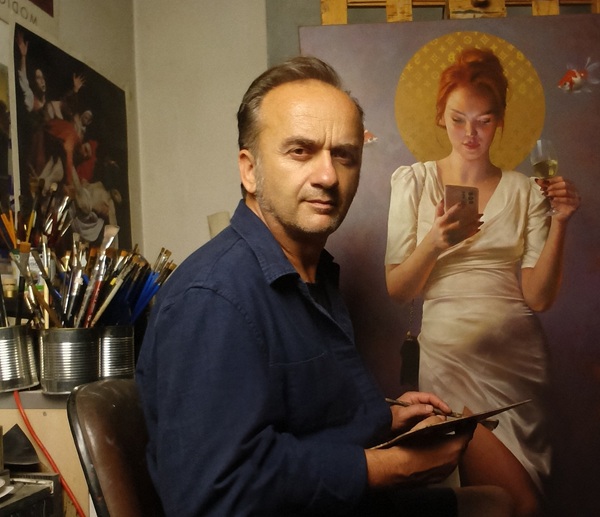
西尼莎·卡沙维尔斯基
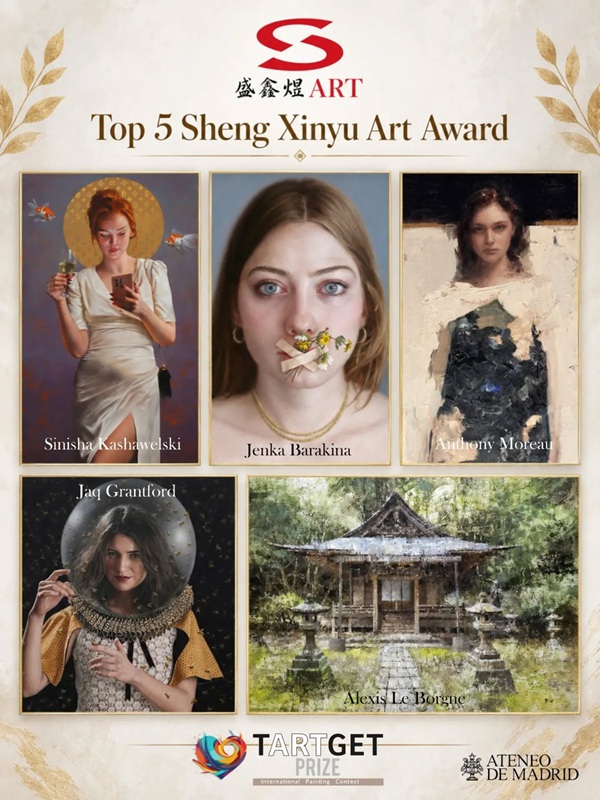
在2026年西班牙“塔吉特绘画”大赛中,有五件作品被授予“盛鑫煜艺术奖”,其中包括西尼莎·卡沙维尔斯基的作品(图一),图片来自“塔吉特绘画”大赛官网
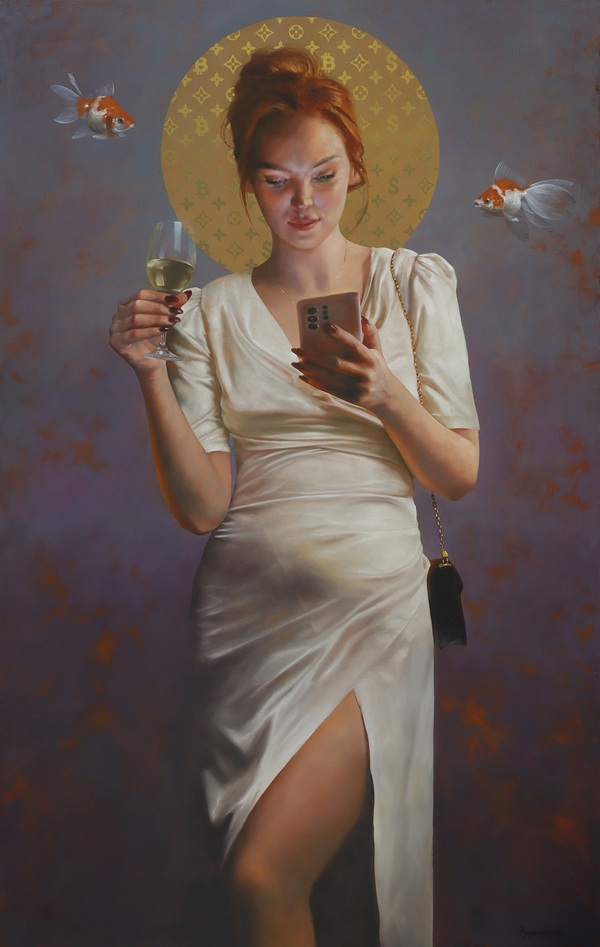
西尼莎·卡沙维尔斯基获奖作品
西尼莎·卡沙维尔斯基(Sinisha Kashawelski)是来自北马其顿的当代具象画家,其艺术语言融合了欧洲古典绘画传统、具象写实主义、象征主义与超现实主义。 他曾在斯科普里应用艺术学院学习,并毕业于斯科普里美术学院。 其作品以精心构建的人物形象、充满心理张力的面部与眼神、戏剧性的光影、层层叠釉的油画技法以及精心展开的象征叙事为特征。
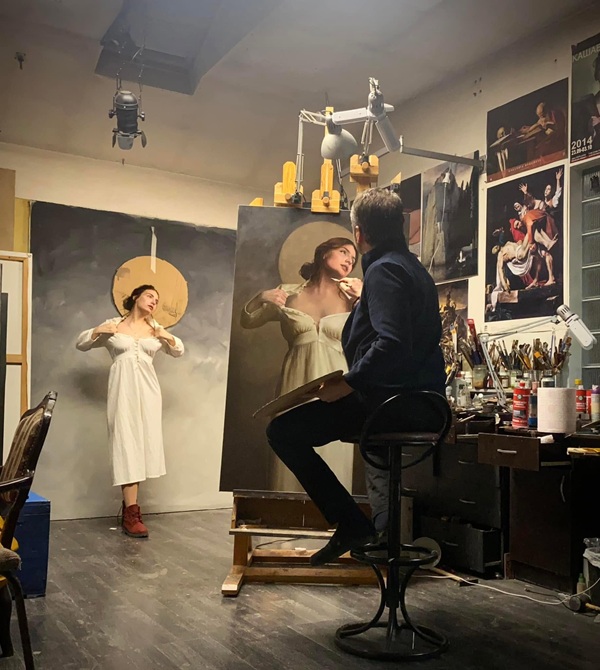
他的创作深受古典大师技术规范的深刻影响,同时其题材与象征结构则回应着当代的问题与体验。西尼莎·卡沙维尔斯基经常以精心摆拍的摄影参考为起点,随后通过素描、构图、绘画、修改与象征性转化对其进行重构。因此,摄影图像只是起点而非终点。 他的绘画中常包含作为视觉线索或谜题的元素。物体、姿态、人物与符号被置于特定关系中,引导观者超越即时的视觉现实,去探寻更深层次的意义。
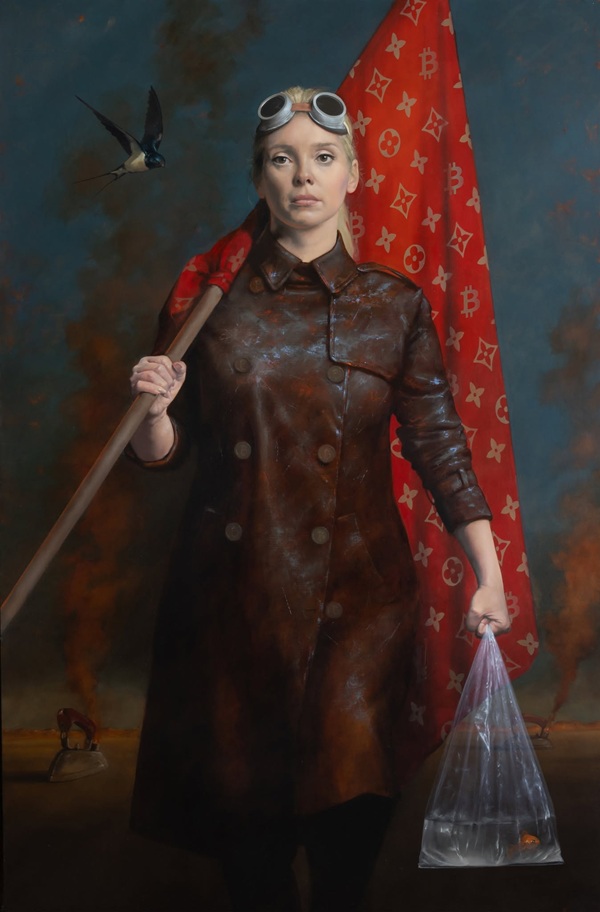
西尼莎·卡沙维尔斯基作品
艺术家声明
我的创作根植于具象绘画传统,但我的意图并非再现过去。我感兴趣的是,当古典绘画的知识、规范与视觉语言与当代经验展开对话时,会发生什么。 人物形象是我实践的中心。更具体地说,我着迷于面孔与凝视——着迷于一个单一的表情可以承载整段心理叙事的可能性。
我主要使用布面油画,并采用受古典大师影响的层层叠染技法。釉染、明暗造型、受控的过渡、精心构建的光线以及对解剖的关注,是我创作过程的基础。我珍视这种技术规范,因为它赋予绘画以物理的深度与存在感。 但对我而言,写实只是起点。
我经常在原本可识别的场景中引入象征与超现实元素,物体、姿态、动物、建筑片段及其他视觉元素可以作为更大谜题中的线索。它们之间的关系往往刻意保持暧昧,我希望观者参与完成绘画的意义。我的许多作品始于精心摆拍的摄影参考,我并不将摄影作为绘画的替代品,而是将其作为原材料。在绘画过程中,参考被重构、修改与转化,最终图像成为原照片中不可能存在的东西,我的文化背景也是作品的重要层面。
我来自北马其顿,一个受到多重历史、文化与象征影响的地方。马其顿传统、神话与集体记忆的元素以原型形式、符号与更大文化记忆的碎片间接进入我的绘画。 我对古典技法与当代思想交汇的那个点感兴趣。 我不想再现过去。我想理解过去的知识在今天能使之成为可能的是什么。对我而言,当观者认出某种熟悉的东西,却无法立即解释图像中发生的一切时,一幅画才变得最有力量。 绘画应该吸引目光,而目光随后应引导观者更深入——通向一个问题。

访谈
一、文化根源与艺术起步
1、 您的作品深深植根于马其顿的文化传统。该地区的历史记忆、拜占庭遗产以及人文特质是如何塑造您的艺术感知的?
我1969年出生于马其顿库马诺沃的一个工薪家庭,成长于社会主义南斯拉夫时期。我们的生活很简朴。那时,我当然不会去想周围的环境有一天会进入我的画作。我只是在某些图像和符号的包围中成长。小时候,我甚至为学校活动画过宣传海报。当时我并不觉得那是宣传,对我来说,它们只是画画。直到很久以后,我才意识到,那大概是我第一次体验到图像如何传递信息、符号如何影响我们看待事物的方式。
与此同时,马其顿拥有更为古老的视觉记忆——教堂、湿壁画、圣像、正面凝视、光环,这一切都是我周围环境的一部分。后来,大约在2000年至2010年间,我近十年时间专注于圣像和湿壁画的创作,从而更深入地接近了这一传统。我学会了它的技法,也领悟了它的纪律和象征性的思维方式。因此,在没有刻意规划的情况下,我一直生活在非常不同的视觉语言之中:社会主义图像、拜占庭神圣图像,以及后来当代消费社会的图像。我从未坐下来决定要把这些元素结合到我的画作中。它们只是我经历的一部分。或许正因如此,符号才会如此自然地出现在我的作品里。
2您接受过雕塑的学术训练,后来又长期从事拜占庭圣像和湿壁画创作。这些看似不同的学科是如何在您当前的具象语言中融合在一起的?
我的正规教育其实是雕塑,我在斯科普里的中等艺术学校学习了四年雕塑,之后又在美术学院学习了四年,我以同届学生中的优异成绩毕业。为了毕业创作,我花了近两年时间制作大型金属雕塑。在最终考核中,我获得了九分(满分十分)。今天当然知道这是一个优秀的成绩,但在那个年纪,我的感受完全不同,我感到失望,而且与教授之间长期积累的一些问题也一并爆发出来。我的反应非常情绪化,我毁掉了自己花了近两年时间创作的雕塑。如今回想起来,我把它看作一种个人的净化,我需要彻底关上那扇门,才能打开另一扇门。我记得当时对自己说:“如果你不够优秀做不成雕塑家,那就不要做雕塑家” 于是我转向了绘画。
但事实上,我从未完全离开雕塑。它依然存在于我构建身体、理解解剖、体积、重量和空间的方式中。即使在画一张脸时,我仍觉得自己在以雕塑家的方式去塑造它。后来,圣像和湿壁画创作给了我不同的东西——耐心、层层叠加、象征意义、凝视的重要性,以及与图像截然不同的关系。最终,油画成为了所有这些经验得以汇聚的地方。
3、马其顿经历了重大的历史与社会变革,而您自身的艺术发展也涉及与不同文化环境的接触。这些经历如何改变了您对自身艺术身份的理解?
上世纪90年代是非常艰难的岁月。我成长于其中的那个体制正在消失,南斯拉夫解体,整个地区冲突不断,马其顿也经历着困难的转型,经济不安全感是日常生活的一部分。大约有三年时间,我依靠社会救助生活,当你亲身经历这样的时期,你会很快明白“成为艺术家”的浪漫想象与真正以艺术家身份生存的现实之间的巨大差异。对我来说,一个非常重要的时刻出现在2006年,当时我在巴黎待了大约两个月。那是一场全方位的文化和视觉冲击,那时的巴黎对我们这些艺术家来说几乎就像麦加——一个可以亲身站在你以前主要通过书籍和复制品认识的艺术作品面前的地方。我记得自己曾在籍里柯的《美杜莎之筏》前站了几个小时。我仔细观看一切:身体、光线、构图、颜料本身。我几乎是在用眼睛扫描它,我想弄清楚它是如何被创作出来的。不只是籍里柯,我第一次能够直接站在那些我研究了多年的作品面前,这对我非常重要。复制品可以给你很多信息,却无法给予你绘画的物理体验:它的尺度、表面和存在感。
大约同一时期,我大量阅读加西亚·马尔克斯和豪尔赫·路易斯·博尔赫斯。马尔克斯让我着迷于非凡之事如何自然地存在于日常生活之中;博尔赫斯则为我打开了另一个世界:符号、迷宫、现实的不同层次。后来,在巴塞罗那和菲格拉斯,我还直接接触到了毕加索和达利的作品。我不会说2006年我突然找到了自己的风格,那太简单了,但我可以说,那正是我作品真正开始转变的时期。
随后在2016年,我第一次访问中国,那是一次截然不同的体验。我接触到一种在历史上与我自身相距甚远的文化和生活哲学,但奇怪的是我也感受到某种亲近。我不能说中国改变了我绘画的视觉外观,我也从未想过仅仅因为去过那里就借用中国元素,影响更多是内在的。它让我以不同的方式思考传统、时间、文化,以及个人与周围更大世界之间的关系。我与中国的联系通过后来的访问、项目和展览得以延续,最终促成了2019年我在北京的个展。所有这些经历让我明白,接触另一种文化并不一定会让你远离自己的身份。有时,它反而帮助你更好地理解它。
二、 艺术语言与风格体系
4、您的绘画将高度成熟的古典现实主义与象征性、超现实元素结合在一起。您是如何在现实的精确性与梦境、象征的模糊性之间取得平衡的?
我对古典绘画的兴趣很早就开始了。学生时代,我花了大量时间试图理解那些大师们究竟是如何作画的。我阅读关于技法和材料的书籍,研究复制品并临摹,尤其是伦勃朗的作品;后来我又研究了弗拉戈纳尔、波提切利以及其他许多画家。有时我会刻意用完全不同的方式作画,只是为了弄清楚某种效果是如何实现的。我并不想采用他们的风格,我感兴趣的是他们的知识。随着时间的推移,这一切都成为了我自身技法基础的一部分。现实主义对我很重要,因为它给观者提供了某种可信的东西,我首先创造出一个看似可能的世界,然后引入一些轻微扰乱它的元素:一个符号、一件物品、事物之间不寻常的关系,有时甚至是某种不可能的事物。我喜欢那种时刻:观者先接受了图像,然后开始感觉到事情并不完全像表面看起来那样,我经常把我的构图描述为字谜,里面有线索,但我不想给观者一个完整的答案。我更希望画面保持足够的开放,让另一个人能够带着自己的经验进入其中。
5、 拜占庭圣像画具有精神性与非自然主义的视觉逻辑。这一传统中哪些方面对您的当代创作仍然最具相关性?
从事圣像和湿壁画创作让我明白,图像不必字面地模仿现实,也能谈论现实。 在拜占庭艺术中,凝视、手势、人物的位置、光环,甚至空间的构建方式——所有这些都具有意义。它们并非仅仅为了装饰而存在,这种思维方式一直伴随着我,但我并无兴趣在当代绘画中复制拜占庭艺术。我认为简单地复制过去的外观没有什么价值,我感兴趣的是其背后的知识,我可以向伦勃朗学习,而不必画得像伦勃朗;同样,我也可以从拜占庭艺术中汲取某些东西,而不必在今天绘制拜占庭圣像。
对我来说,我们应当继承的是知识,而非公式。 正因如此,像光环这样的符号可以自然地出现在我的当代绘画中。它依然承载着历史记忆,但我可以把它置于另一种语境之中。例如在《圣洁的虚荣》(SANCTA VANITAS)中,光环仍然可以被识别为与神圣相关的象征,但在它内部,我们看到的是金钱、奢华、品牌与欲望等当代符号。符号是古老的,而围绕它的以及我们置于其中的,则属于我们自己的时代。
6. 您曾从事雕塑、圣像、湿壁画和油画创作。您如何选择媒介?油画在今天又让您得以表达什么?
如今,油画显然是我的主要创作媒介。雕塑教会了我如何构建形体、圣像和湿壁画教会了我纪律、层层叠加,以及另一种思考符号的方式;油画则给了我将这些全部融合在一起的可能。我也喜欢油画缓慢的特点,我通过层层叠加、罩染、修正和渐进的过渡来工作。我需要这个过程,它给了我在绘画时思考的时间,而且作品在创作过程中常常会发生改变。我可能以一个想法开始,却在途中发现了别的东西。对我来说,技法与意义并非分离的事物,一幅画在物理上被制作的方式,影响着我们体验它的方式。我使用的技法来自悠久的传统,但我所处理的题材属于我今天生活的世界;我使用的是古老的语言,但我画的并不是一个古老的世界。
三、主题内容与叙事
7. 您的作品似乎经常连接过去、现在与未来。马其顿的历史创伤、文化传承以及当代转型在多大程度上是您叙事的来源?
我属于经历过两种截然不同社会制度的一代人。我在社会主义中成长,随后又经历了向资本主义的转型。我不想美化一种制度,也不想谴责另一种,我在两者中都看到了好的和坏的方面。我更感兴趣的是,当周围的价值观发生变化时,人会发生什么。小时候,我画过社会主义宣传海报,后来我绘制基督教圣像和湿壁画。如今,我有时会在那些依然带着神圣艺术视觉记忆的画作中,使用奢华、金钱、品牌或数字文化的符号。回望过去,我可以看到这些不同的图像系统贯穿我的一生——社会主义图像、拜占庭神圣图像以及当代消费图像,它们非常不同,但都使用符号来传递价值观,以及关于什么是重要的理念。 我不希望我的画变成政治插图,那并不吸引我。我更感兴趣的是生活在这些系统中的个体,以及当周围的世界发生变化时,我们的信念、欲望和身份会发生什么。
8. 女性形象与象征性物品经常出现在您的作品中,往往与空虚、信仰和欲望相关。对您来说,女性形象代表什么?
女性形象在我的作品中有着非常个人的位置,女性在我自身的成长中非常重要。首先是我的母亲和姐姐,后来是我的女儿。在这些关系中,我常常自然地感受到保护欲,我认为这让我对一种可以与力量并存的脆弱性变得敏感。与女儿在一起时,我也能够非常近距离地观察成长的过程:变化、冲突、叛逆、脆弱、寻找自我身份的需求,以及同时在社会中找到自己位置的需求。我认为自己多年来一直在画这个过程中的某些东西,有时是有意识的,有时则是不经意的。所以当我画一个年轻女性时,我很少把她仅仅看作一个美丽的模特,我感兴趣的是外表背后正在发生的事情——脆弱与力量、抵抗与适应、纯真与经验之间的张力。
美在我的作品中很重要,但往往它只是把观者带入画面的第一样东西。《圣洁的虚荣》(SANCTA VANITAS)其实源于一个非常简单、真实的瞬间,当时我正在为另一幅构图与一位模特工作,她突然接到一个电话,她的表情瞬间变了,她的神情、专注和整个存在状态都变得不同。在那短短的片刻里,她完全沉浸在手机之中,其他一切似乎都消失了,在那一刻,手机成了她的整个世界。我对这种转变感到着迷。这幅画并非一开始就计划好作为对消费主义的批评,它是从那次观察中发展出来的。
我开始思考,那个小小的屏幕在今天能为我们容纳什么——交流、欲望、自我形象、认同、美、金钱、愉悦,以及我们为自己和想要的生活所创造的形象。 其中有某种享乐主义的东西,但同时带有一点虚假或虚幻。然后光环进入了构图,一个古老的神圣象征突然与当代欲望和物质价值的符号展开了对话。我不把这位年轻女性看作是我在评判的对象,她是我所属于的同一个世界的一部分。对我来说,这幅画更像是一个问题:今天我们把注意力投向什么?我们渴望什么?以及或许在不知不觉中,什么开始占据了某种神圣之物的位置?这就是标题《圣洁的虚荣》的由来。
9. 一位植根于地区与历史传统的艺术家,如何避免怀旧或复古主义,并使这种传统在当代艺术中具有意义?
对我来说,答案不是复制传统的表面。我非常尊重传统,但这并不意味着我必须再现它的外观。在我们之前的艺术家的作品中积累了巨大的知识,我想理解这些知识,然后以自己的方式使用它。伦勃朗并不是教我画得像伦勃朗,拜占庭艺术也不意味着我今天必须绘制中世纪圣像,雕塑也不意味着我必须一直做雕塑家。它们都教会了我不同的观看和思考方式。这就是我所说的“我们应当继承知识,而非公式”的含义。如果传统活在艺术家的内心,我认为完全没有必要强行把它塞进作品里。它会自然出现,即使题材完全是当代的。
四、艺术追求与时代思考
10. 您获得了许多国际奖项,并广泛展出作品。在获得如此多认可之后,您创作背后最核心的动力是什么?
认可很重要,如果我说它对我毫无意义,那就不诚实了。2012年我在巴黎法国艺术家沙龙获得铜奖,2013年获得银奖,2014年获得金奖,这些都是非常重要的时刻。它们给了我信心:在马其顿工作室里创作的东西,能够在自己的环境之外进行交流。但奖项只是瞬间,创作在它们之后仍会继续。曾经有一段时间,绘画也直接与生存相关。我画商业画,因为我必须生活并养活家人,我对那段时期并不感到羞愧,也不会评判制作或购买这类作品的人。那只是当时我生活的一部分。但大约在2010年,我意识到自己开始降低了对自己的标准。 有一天,我把工作室里所有的商业画都拿了出去烧掉了。对我来说,那是又一次个人的净化。第一次是毁掉毕业雕塑时发生的,但那时我很年轻,反应是情绪化和冲动的。这一次,决定是有意识的,那不是对市场的反抗。那是我为自己需要做的事情,我想做一个清晰的决裂,重新开始。
从那一刻起,我决定任何离开我工作室的作品,都必须达到我当时所能达到的最高标准。我对自己变得更加严格,也更加自我批判。那也是我真正决定以独立职业艺术家身份构建自己生活的时刻。然而,今天即便这一点也已经改变了。我感觉自己进入了一种魔法圈,绘画已经如此融入我的生活,我不再真正把两者分开。我看到什么、读到什么、遇见某人、经历某事,常常就会在脑海中开始转化为图像。我生命中曾有过为了生活而画画的时期。今天我不再为了生活而画画,我为了画画而生活。它不再仅仅是我的职业,它已经成为我生命的一部分。
11. 在一个常以速度、碎片化、商业化和迅速变化的趋势为特征的当代艺术世界中,您如何理解自己对传统技法和慢速绘画的坚持?
我不把我的作品看作是对当代艺术的抵抗,我生活在当代世界,我的许多题材直接来自这个世界。例如《圣洁的虚荣》中的智能手机完全属于我们这个时代,而光环则承载着更古老的视觉记忆。我不认为把它们放在一起有什么矛盾,我更担心的是肤浅。
今天我们被图像包围,我们快速观看它们、消费它们,然后立即转向下一个。绘画给了我不同的体验,我的过程是缓慢的,因为我需要它缓慢,层层叠加、罩染和修正给了我思考、改变事物,有时甚至改变最初想法的时间。这不是对某个更早艺术时期的怀旧,这只是我最适合的工作方式。同时,技法本身对我来说并不足够,一幅技法完美的画仍然可以什么都不说,而一个有趣的概念如果没有视觉力量,可能只是对一个想法的解释,我寻找的是理念、情感、符号与执行共同发挥作用的那一刻。
12. 您既是一位拥有深厚文化传承的马其顿艺术家,又是一位在国际上活跃的当代画家。您如何看待自己未来的艺术方向,以及马其顿文化身份在其中的位置?
当有人把我称为当代马其顿艺术的代表时,我总是有些谨慎,因为我不认为一个艺术家可以代表整个文化。但我非常清楚自己从哪里来,我出生于库马诺沃,在斯科普里接受教育,受过雕塑训练,花了多年时间从事圣像和湿壁画创作,经历了转型的艰难岁月,并逐渐建立起自己作为画家的生活。后来,与不同艺术和文化环境的接触拓宽了我的视野,但从未抹去我的来处。我曾说过艺术没有国籍,但我永远是一位马其顿艺术家。我依然相信这一点。对我来说,成为马其顿艺术家并不意味着我必须图解民族身份,或把我的文化变成给国际观众看的民俗。如果那种文化记忆真正是我的一部分,它会自然地出现在作品中。
我来自一个小国,但我不认为艺术抱负应该以你来自的国家的大小来衡量,我们不必模仿主要艺术中心才能变得相关。我们必须发展自己的声音,然后有信心把这个声音带到世界。至于未来,我不想确切知道我的绘画会走向何处,如果我已经知道十年后我的作品会是什么样子,我认为那就有问题了。我想保持好奇,不断提升对自己的要求标准,并在感到有必要改变时允许作品改变。我自己的生活已经多次向我展示,有时你必须留下一些东西才能向前迈进;我想我对绘画也抱有同样的期望,我不希望它只是确认我已经知道的东西,我希望它带我去一个我从未到过的地方。
Interview for Sheng Xinyu Art
I. CULTURAL ROOTS AND ARTISTIC BEGINNINGS
1. Your works are deeply rooted in Macedonia's cultural traditions. How have the historical memory, Byzantine heritage and humanistic character of the region shaped your artistic sensibility?
I was born in 1969 in Kumanovo, Macedonia, into a working-class family, and I grew up in socialist Yugoslavia. We lived modestly. At that time, of course, I was not thinking about how the environment around me might one day enter my paintings. I was simply growing up surrounded by certain images and symbols.
As a child, I even made propaganda posters for school events. I did not think of them as propaganda then. For me, they were drawings. Only much later did I realize that this was probably one of my first experiences of how an image can carry a message and how symbols can influence the way we see things.
At the same time, Macedonia has a much older visual memory - churches, frescoes, icons, the frontal gaze, the halo, all of this was part of the environment around me. Later, when I worked intensively with icons and frescoes for almost a decade, roughly between 2000 and 2010, I came much closer to that tradition. I learned its technique, but also its discipline and its symbolic way of thinking.
So, without planning it, I have lived with very different kinds of visual language: socialist imagery, Byzantine sacred imagery and, later, the imagery of contemporary consumer society.
I never sat down and decided to combine these things in my paintings. They are simply part of my experience. Probably this is one reason why symbols appear so naturally in my work.
2. You were academically trained as a sculptor and later worked extensively with Byzantine icon and fresco painting. How did these apparently different disciplines come together in your current figurative language?
My formal education was actually in sculpture. I studied sculpture for four years at secondary art school in Skopje and then for another four years at the Faculty of Fine Arts. I graduated as the student of my generation.
For my diploma, I spent almost two years working on large metal sculptures. At the final examination I received a nine out of ten. Today, of course, I know that this is an excellent grade, but at that age I experienced it very differently. I was disappointed, and there were also things in my relationship with my professor that had accumulated over time.
My reaction was very emotional. I destroyed the sculptures I had worked on for almost two years.
When I think about it today, I see it as a kind of personal catharsis. I needed to close one door completely in order to open another. I remember saying to myself: "If you are not good enough to be a sculptor, then you will not be a sculptor."
So I turned toward painting.But in reality I never completely left sculpture. It is still present in the way I construct a body, understand anatomy, volume, weight and space. Even when I paint a face, I think there is still something of the sculptor in the way I build it.Later, icon and fresco painting gave me something different - patience, layering, symbolism, the importance of the gaze and a very different relationship with the image.Eventually, oil painting became the place where all of these experiences could meet.
3. Macedonia has experienced major historical and social transformations, while your own artistic development has also involved encounters with different cultural environments. How did these experiences change your understanding of your own artistic identity?
The 1990s were very difficult years. The system in which I had grown up was disappearing, Yugoslavia was breaking apart, there were conflicts throughout the region and Macedonia was going through a difficult transition. Economic insecurity was part of everyday life. For around three years I was receiving social assistance.
When you live through such a period, you quickly understand the difference between the romantic idea of being an artist and the reality of trying to survive as one.
A very important moment for me came in 2006, when I spent about two months in Paris. It was a cultural and visual shock in every sense. At that time, Paris was almost like a Mecca for us as artists - a place where you went to stand in front of the art you had previously known mainly from books and reproductions.
I remember standing in front of Gericault's The Raft of the Medusa for hours. I was looking at everything - the bodies, the light, the composition, the paint itself. I was almost scanning it with my eyes. I wanted to understand how it had been made.
And it was not only Gericault. For the first time I could stand directly in front of works I had studied for years. That was very important to me. A reproduction can give you a lot of information, but it cannot give you the physical experience of the painting - its scale, surface and presence.
Around the same period, I was reading Gabriel Garcia Marquez and Jorge Luis Borges intensively. Marquez fascinated me with the way the extraordinary could exist naturally inside ordinary life. Borges opened another kind of world for me - symbols, labyrinths, different layers of reality. Later, in Barcelona and Figueres, I also encountered the work of Picasso and Dali directly.
I would not say that in 2006 I suddenly found my style. That would be too simple. But I can say that this was the period when a real transformation in my work began.
Then, in 2016, I visited China for the first time. That was a very different experience. I encountered a culture and a philosophy of life that were historically very distant from my own, but strangely, I also felt a certain closeness.
I cannot say that China changed the visual appearance of my paintings, and I never wanted to borrow Chinese elements simply because I had been there. The influence was more internal. It made me think differently about tradition, time, culture and the relationship between the individual and the larger world around us.
My relationship with China continued through later visits, projects and exhibitions, eventually leading to my solo exhibition in Beijing in 2019.
All these experiences made me understand that encountering another culture does not necessarily take you away from your own identity. Sometimes it helps you understand it better.
II. ARTISTIC LANGUAGE AND STYLISTIC SYSTEM
4. Your painting combines highly developed classical realism with symbolic and surreal elements. How do you balance the precision of reality with the ambiguity of dream and symbolism?
My interest in classical painting started very early. During my student years, I spent a great deal of time trying to understand how the old masters actually painted.
I read about techniques and materials, studied reproductions and made copies, especially after Rembrandt. Later I studied Fragonard, Botticelli and many other painters. Sometimes I deliberately painted in completely different manners simply to understand how a certain effect was achieved.
I was not interested in adopting their style. I was interested in their knowledge.
Over time, all of this became part of my own technical foundation.
Realism is important to me because it gives the viewer something believable. I first create a world that appears possible. Then I can introduce something that slightly disturbs it - a symbol, an object, an unusual relationship between things, sometimes something impossible.
I like that moment when the viewer first accepts the image and then begins to feel that something is not quite as it seems.
I have often described my compositions as rebuses. There are clues, but I do not want to give the viewer a complete solution. I prefer the painting to remain open enough for another person to enter it with their own experience.
5. Byzantine icon painting has a spiritual and non-naturalistic visual logic. Which aspects of this tradition remain most relevant to your contemporary work?
Working with icons and frescoes taught me that an image does not have to imitate reality literally in order to speak about reality.
In Byzantine art, the gaze, the gesture, the position of the figure, the halo, even the way space is constructed - all of these things have meaning. They are not there only for decoration.
That way of thinking stayed with me.
But I have no interest in reproducing Byzantine art in my contemporary paintings. I think there is little value in simply copying the appearance of the past. What interests me is the knowledge behind it.
I can learn from Rembrandt without painting like Rembrandt, just as I can carry something from Byzantine art without painting Byzantine icons today.
For me, we should inherit knowledge, not formulas.
This is why a symbol such as a halo can appear naturally in a contemporary painting of mine. It still carries its historical memory, but I can place it in another context.
In SANCTA VANITAS, for example, the halo is still recognizable as a symbol connected with the sacred, but inside it we find contemporary symbols of money, luxury, brands and desire.
The symbol is old. What surrounds it - and what we place inside it - belongs to our own time.
6. You have worked with sculpture, icons, frescoes and oil painting. How do you choose the medium, and what does oil painting allow you to express today?
Today, oil painting is clearly my main medium.
Sculpture taught me how to construct form. Icon and fresco painting taught me discipline, layering and another way of thinking about symbols. Oil painting gives me the possibility to bring all of that together.
I also like the fact that oil painting is slow.
I work through layers, glazing, corrections and gradual transitions. I need that process. It gives me time to think while I am painting, and very often the painting changes while I am working on it. I may begin with one idea and discover something else along the way.
For me, technique and meaning are not separate things. The way a painting is physically made influences the way we experience it.
I use techniques that come from a long tradition, but the subjects I am dealing with belong to the world I live in today.
I use an old language, but I am not painting an old world.
III. THEMATIC CONTENT AND NARRATIVE
7. Your works often seem to connect past, present and future. To what extent are Macedonia's historical wounds, cultural inheritance and contemporary transformation sources for your narratives?
I belong to a generation that has lived through two very different social systems. I grew up in socialism and then experienced the transition toward capitalism.
I do not want to romanticize one system or condemn the other. I have seen good and bad things in both. What interests me much more is what happens to people when the values around them change.
As a child, I made socialist propaganda posters. Later I painted Christian icons and frescoes. Today I sometimes use symbols of luxury, money, brands or digital culture in paintings that still carry something from the visual memory of sacred art.
When I look back, I can see these different systems of images running through my life - socialist imagery, Byzantine sacred imagery and contemporary consumer imagery.
They are very different, but all of them use symbols to communicate values and ideas about what is important.
I do not want my paintings to become political illustrations. That does not interest me. I am much more interested in the individual living inside these systems, and in what happens to our beliefs, desires and identity when the world around us changes.
8. Female figures and symbolic objects frequently appear in your work, often in relation to emptiness, faith and desire. What does the female figure represent for you?
The female figure has a very personal place in my work.
Women were very important in my own formation - first my mother and my sister, and later my daughter. In these relationships I often felt naturally protective. I think this made me sensitive to a certain vulnerability that can exist together with strength.
With my daughter, I was also able to observe the process of growing up very closely - the changes, conflicts, rebelliousness, vulnerability, the need to find your own identity and, at the same time, somehow find your place within society.
I think I have been painting something of this process for years, sometimes consciously and sometimes without thinking about it.
So when I paint a young woman, I rarely see her simply as a beautiful model. I am interested in what is happening behind that appearance - the tension between vulnerability and strength, resistance and adaptation, innocence and experience.
Beauty is important in my work, but often it is only the first thing that brings the viewer into the painting.
SANCTA VANITAS actually began from a very simple, real moment.
I was working with a model for another composition when she received a phone call. Suddenly her face changed. Her expression, concentration and entire presence were different. For those few moments, she was completely absorbed by the phone. Everything else seemed to disappear.
For that moment, the phone became her whole world.
I was fascinated by that transformation.
The painting did not begin as a planned criticism of consumerism. It developed from that observation. I started thinking about what that small screen can contain for us today - communication, desire, self-image, recognition, beauty, money, pleasure, the image we create of ourselves and of the life we want.
There was something hedonistic in it, but at the same time something slightly false or illusory.
Then the halo came into the composition. An old symbol of the sacred was suddenly in dialogue with contemporary symbols of desire and material value.
I do not see the young woman as someone I am judging. She is part of the same world that I am part of.
For me, the painting is more of a question: what do we give our attention to today, what do we desire, and what, perhaps without realizing it, begins to take the place of something sacred?
That is where the title SANCTA VANITAS came from.
9. How can an artist rooted in a regional and historical tradition avoid nostalgia or revivalism and make that tradition meaningful in contemporary art?
For me, the answer is not to copy the surface of tradition.
I respect tradition very much, but that does not mean I have to reproduce its appearance.
There is enormous knowledge accumulated in the work of artists before us. I want to understand that knowledge and then use it in my own way.
Rembrandt does not teach me to paint like Rembrandt. Byzantine art does not mean that I have to paint medieval icons today. Sculpture does not mean that I have to remain a sculptor.
They have all taught me different ways of seeing and thinking.
That is what I mean when I say that we should inherit knowledge, not formulas.
If tradition is alive inside the artist, I do not think there is any need to force it into the work. It will appear naturally, even when the subject is completely contemporary.
IV. ARTISTIC PURSUIT AND REFLECTIONS ON THE TIMES
10. You have received numerous international awards and exhibited widely. After so much recognition, what remains the central motivation behind your work?
Recognition is important. I would not be honest if I said it means nothing to me.
When I received the Bronze Medal at the Salon des Artistes Francais in Paris in 2012, followed by the Silver Medal in 2013 and the Gold Medal in 2014, these were very important moments. They gave me confidence that something created in my studio in Macedonia could communicate outside my own environment.
But awards are moments. The work continues after them.
There was a time when painting was also connected directly with survival. I made commercial paintings because I had to live and support my family. I do not feel ashamed of that period and I do not judge people who make or buy that kind of work. It was simply part of my life at that time.
But around 2010, I realized that I had begun to lower the standard I expected from myself.
One day I took all the commercial paintings that were in my studio, carried them outside and burned them.
For me, that was another personal catharsis.
The first one had happened when I destroyed my diploma sculptures, but I was very young then and the reaction was emotional and impulsive. This time the decision was conscious.
It was not an act against the market. It was something I needed to do for myself. I wanted to make a clear break and begin again.
From that moment, I decided that anything leaving my studio had to meet the highest standard I was capable of at that point. I became much more demanding of myself and much more self-critical.
That was also the moment when I really decided to build my life as an independent professional artist.
Today, however, even that has changed.
I feel that I have entered a kind of magic circle. Painting is so integrated into my life that I no longer really separate the two. I see something, read something, meet someone, experience something, and very often it begins to turn into an image somewhere in my mind.
There were times in my life when I painted in order to live.
Today I no longer paint in order to live. I live in order to paint.
It is not simply my profession anymore. It has become part of my life.
11. In a contemporary art world often characterized by speed, fragmentation, commercialization and rapidly changing trends, how do you understand your commitment to traditional technique and slow painting?
I do not see my work as a resistance to contemporary art. I live in the contemporary world, and many of my subjects come directly from it.
The smartphone in SANCTA VANITAS, for example, belongs completely to our time, while the halo carries a much older visual memory. I do not see a contradiction in putting them together.
What concerns me more is superficiality.
Today we are surrounded by images. We see them very quickly, consume them and move immediately to the next one. Painting gives me a different experience.
My process is slow because I need it to be slow. Layers, glazing and corrections give me time to think, change things and sometimes even change the original idea.
This is not nostalgia for an older period of art. It is simply the way I work best.
At the same time, technique by itself is not enough for me. A technically perfect painting can still say nothing. And an interesting concept without visual power can remain only an explanation of an idea.
What I am looking for is the moment when the idea, emotion, symbol and execution work together.
12. You are both a Macedonian artist with a strong cultural inheritance and an internationally active contemporary painter. How do you see your future artistic direction and the place of Macedonian cultural identity within it?
I am always a little careful when someone calls me a representative of contemporary Macedonian art, because I do not think one artist can represent an entire culture.
But I know very clearly where I come from.
I was born in Kumanovo, educated in Skopje, trained as a sculptor, spent years working with icons and frescoes, lived through the difficult years of transition and gradually built my life as a painter.
Later, encounters with different artistic and cultural environments broadened my view, but they never erased where I came from.
I once said that art has no nationality, but I will always be a Macedonian artist. I still believe that.
For me, being a Macedonian artist does not mean that I have to illustrate national identity or turn my culture into folklore for an international audience. If that cultural memory is really part of me, it will appear naturally in the work.
I come from a small country, but I do not think artistic ambition should be measured by the size of the country you come from. We do not have to imitate the major art centres in order to be relevant. We have to develop our own voice and then have the confidence to take that voice into the world.
As for the future, I do not want to know exactly where my painting will go.
If I already knew what my work would look like ten years from now, I think something would be wrong. I want to remain curious, to keep raising the standard I demand from myself and to allow the work to change when I feel that change is necessary.
My own life has already shown me several times that sometimes you have to leave something behind in order to move forward.I think I expect the same from painting. I do not want it only to confirm what I already know. I want it to take me somewhere I have not been before.